

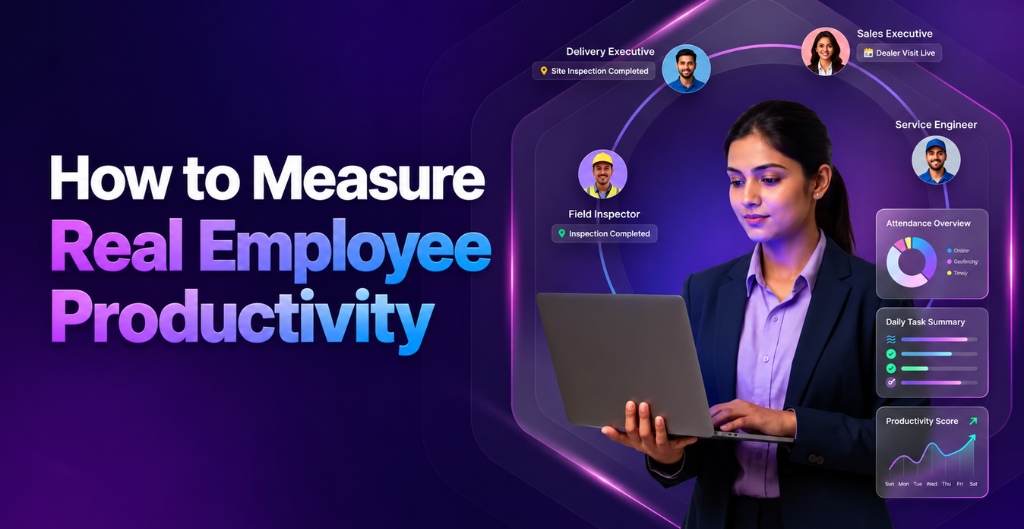
Is your team actually productive, or does everyone just look busy?
Employee productivity is not just about spending eight hours at a desk, attending meetings, or responding to messages. It is about how effectively employees use their time, complete important tasks, maintain work quality, and contribute to business goals.
In today’s competitive business environment, understanding the difference between being busy and being productive is essential. While busyness focuses on activities and working hours, productivity measures meaningful results.
Businesses that understand employee productivity can identify inefficiencies, improve time management, and create a more effective working environment.
Let’s explore seven powerful ways to measure and improve workplace productivity.
1. Busy vs. Productive: Understand the Real Difference
Being busy means having a packed schedule, switching between tasks, and spending hours on different activities. Being productive means prioritizing important work, completing assignments efficiently, and delivering meaningful results.
For example, one employee might spend an entire day answering emails and attending meetings but complete very few important tasks. Another might finish high-priority assignments in less time through focused work and effective planning.
Both employees may look busy, but their results can be completely different.
The real question isn’t how many hours employees work. It’s what they accomplish during those hours.
2. Why Employee Productivity Matters for Business Growth
Without clear performance indicators, managers may struggle to understand how employees spend their working hours and where improvements are needed.
Measuring employee productivity helps businesses:
- Identify time wastage: Discover opportunities to reduce unnecessary activities and distractions.
- Improve task completion: Monitor assignments, deadlines, and pending work.
- Recognize performance gaps: Identify where employees may need additional support or training.
- Improve time management: Help teams prioritize important tasks and reduce delays.
- Make informed decisions: Evaluate performance using relevant data instead of assumptions.
The objective is not simply to make employees work harder. Instead, businesses should help employees work smarter and achieve better results.
3. Seven Powerful Ways to Measure Employee Productivity
Measuring employee productivity requires more than checking attendance or counting working hours. Businesses should combine multiple performance indicators to understand how effectively employees work.
A. Measure Task Completion
Track how many assigned tasks employees complete within a specific period and whether they meet deadlines.
For example, if an employee completes eight out of ten assigned tasks within the expected timeframe, managers can review the completion rate and investigate any delays.
However, task quantity alone does not tell the whole story. Complex assignments may require more time than routine activities, so workload, difficulty, and quality should also be considered.
B. Track Active Work Time
Knowing when employees log in and log out provides basic attendance information, but it does not explain how their working time is spent.
Activity tracking can help managers understand active periods, inactivity, and application usage during working hours.
When interpreted alongside task completion and work outcomes, these insights can reveal opportunities to improve focus and time management.
C. Evaluate Work Quality
Fast completion does not always mean good performance.
If employees finish tasks quickly but frequently make mistakes or require repeated revisions, the overall result may suffer.
Therefore, consider accuracy, customer satisfaction, error rates, and rework when evaluating performance.
True productivity combines efficiency with quality.
D. Monitor Task Progress and Deadlines
Unfinished tasks may indicate unclear requirements, resource shortages, dependencies, or other obstacles.
Monitoring task progress helps managers identify delays early and provide support before deadlines are missed.
Clear task ownership, defined priorities, and regular progress updates also improve accountability across teams.
E. Analyze Focus and Distractions
Frequent interruptions, unnecessary meetings, and constant switching between applications can make it difficult for employees to concentrate.
Understanding work patterns can help organizations identify opportunities to reduce distractions and encourage focused work.
However, low computer activity does not necessarily mean low productivity. Employees may be attending meetings, making phone calls, planning projects, or performing offline work.
F. Review Performance Against Goals
Every employee should have clear responsibilities and measurable objectives.
Managers can evaluate performance by comparing actual results against agreed targets, project milestones, deadlines, and relevant quality standards.
This approach helps businesses understand whether employees are making meaningful progress toward organizational goals rather than simply completing routine activities.
G. Collect Feedback and Identify Obstacles
Productivity challenges are not always caused by employees. Outdated processes, unclear instructions, excessive workloads, and inefficient tools can also affect performance.
Regular feedback helps managers identify these obstacles and make practical improvements.
Combining employee feedback with relevant performance information creates a more balanced approach to workplace productivity.
4. Why Attendance Alone Cannot Measure Employee Productivity
An employee may be present in the office for eight hours without making meaningful progress on important assignments. Another employee may complete the same work efficiently while maintaining high-quality standards.
Attendance records show presence, not necessarily performance.
Similarly, screenshots, application usage, and activity reports provide useful context, but they cannot independently determine an employee’s contribution.
Businesses should combine attendance, activity patterns, task progress, work quality, and actual outcomes to build a balanced picture of employee productivity.
This approach encourages managers to focus on performance improvement rather than simply counting hours at a desk.
5. How Technology Improves Employee Productivity Tracking
Manually collecting employee updates, checking task progress, and preparing performance reports can consume valuable management time.
A productivity tracking solution brings relevant work information into a centralized dashboard, making it easier to understand employee activity and team performance.
With suitable technology, businesses can:
- Monitor work activity and active or idle periods.
- Review application usage and activity patterns.
- Understand task progress and completion status.
- Identify potential productivity gaps.
- Review team performance using relevant metrics.
- Generate insights that support workforce planning.
These capabilities help managers move away from guesswork and toward more informed decisions.
For additional guidance on building a productive workplace, explore the official CIPD resources on employee performance.
However, productivity monitoring should be transparent, proportionate, and aligned with applicable employee privacy requirements. Monitoring data is most valuable when used to identify challenges, improve workflows, and support employees rather than simply judge them.
6. Measure Employee Productivity with VOffice Desk
Understanding employee productivity becomes easier when managers have relevant information available through a centralized dashboard.
VOffice Desk Productivity Suite helps businesses gain visibility into employee work activity through a dashboard designed to support workforce monitoring and performance analysis.
With VOffice Desk, businesses can:
- Monitor Employee Activity: Gain visibility into work activity and application usage.
- Review Active and Idle Time: Understand activity patterns throughout the working day.
- Track Productivity Metrics: Review productivity scores and relevant performance indicators.
- Understand Team Performance: Get a clearer view of team activity and work status through dashboard insights.
- Support Better Decisions: Use available productivity information to identify potential improvements in work patterns and processes.
Instead of relying only on attendance records or frequent manual follow-ups, managers can use a more structured view of employee activity to identify areas that need attention.
The objective is simple: help businesses understand how work happens, recognize opportunities for improvement, and create a more productive working environment.
Explore VOffice Desk to learn more about its Productivity Suite and business management capabilities.
7. Build a Culture That Values Results, Not Just Activity
Technology can provide valuable insights, but sustainable employee productivity also depends on how businesses manage their teams.
To encourage genuine productivity:
- Set clear goals and measurable expectations.
- Prioritize outcomes over hours spent at a desk.
- Reduce unnecessary meetings and repetitive work.
- Provide employees with the resources they need.
- Recognize quality work and meaningful contributions.
- Use monitoring data fairly and communicate its purpose clearly.
- Encourage regular feedback and continuous improvement.
When employees understand what success looks like, they can focus their energy on work that creates real value.
Managers also gain a clearer framework for evaluating performance, identifying challenges, and supporting their teams.
Conclusion: Stop Measuring Busyness. Start Improving Productivity.
Being busy may create the appearance of progress, but real productivity is measured by meaningful results, work quality, efficient time management, and consistent progress toward business goals.
By combining clear performance expectations with relevant productivity metrics and the right tools, businesses can identify inefficiencies, improve accountability, and help employees perform at their best.
With VOffice Desk Productivity Suite, organizations can gain better visibility into employee activity and team performance, helping managers make more informed decisions about improving workplace productivity.
Successful businesses don’t just count working hours. They measure the value created during them.
Ready to improve employee productivity? Visit www.vofficedesk.com and discover a smarter way to manage employee activity and workplace performance.