

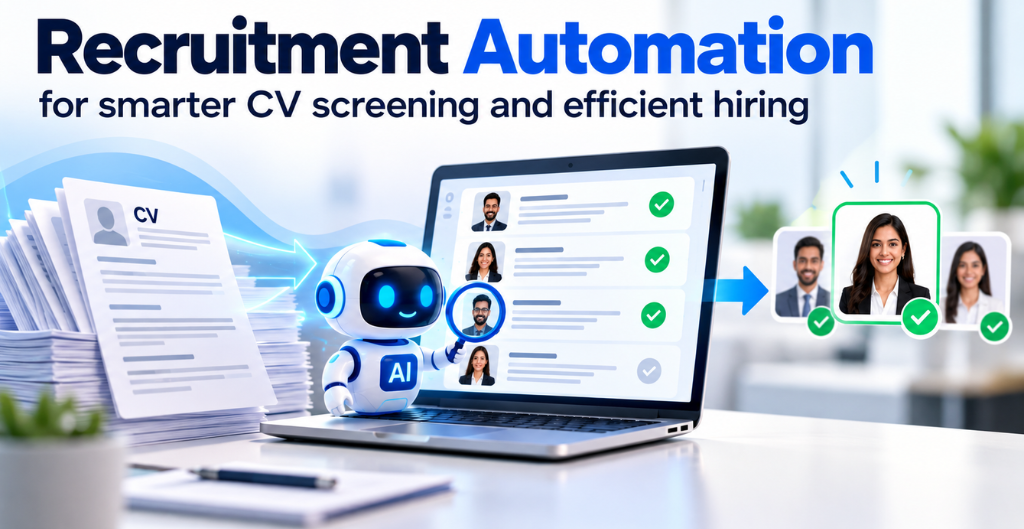
Recruitment automation helps businesses simplify hiring, reduce repetitive tasks, and manage candidate applications more efficiently. Instead of screening every CV manually, recruiters can use smarter tools to identify relevant candidates and organize the hiring process.
What if your recruiters could spend less time screening resumes and more time discovering the right talent?
This is where recruitment automation makes a difference. Instead of allowing repetitive administrative work to slow down hiring, businesses can use smarter recruitment processes to organize applications, simplify candidate screening, and manage vacancies more efficiently.
Why Manual CV Screening Slows Down Recruitment
Recruitment is not just about collecting resumes. It is about understanding people, identifying potential, and finding candidates who fit a company’s requirements. However, traditional hiring methods often leave recruiters spending a large part of their day on repetitive tasks.
Downloading resumes, checking candidate details, updating spreadsheets, and searching through emails can turn recruitment into an administrative challenge. When multiple vacancies need attention, even experienced recruiters can struggle to manage everything efficiently.
The Hidden Cost of Manual Hiring
The real problem is not the number of CVs received. It is the time spent managing them manually.
Recruitment automation helps organize these activities, allowing recruiters to focus more on candidate evaluation, interviews, and building meaningful professional connections.
How Recruitment Automation Makes CV Screening Easier
With VOffice Desk, recruitment automation helps businesses streamline recruitment activities and organize candidate information. By simplifying job posting and CV collection through supported integrations, businesses can make their hiring workflow more efficient.
Identify Relevant Candidates Faster
Imagine hiring a digital marketing manager. You need someone with experience in SEO, content strategy, campaign management, and analytics. Manually opening every resume and searching for these skills can consume valuable hours.
Recruitment automation can help organize candidate information and make relevant qualifications easier to identify. Depending on the available features, AI-assisted screening can also help recruiters compare candidate profiles against predefined job requirements.
Instead of treating every application as a separate administrative task, recruiters can use these tools to prioritize profiles for closer review. Human evaluation remains essential, but the process of identifying potentially suitable candidates becomes more manageable.
Stop Searching for CVs. Start Finding Talent.
How much time does your recruitment team spend searching for resumes saved in different folders, emails, and recruitment portals?
When candidate information is scattered across multiple locations, even a previously shortlisted applicant can be difficult to find. Recruiters may need to repeat work simply because the information they need is not organized properly.
Keep Candidate Information in One Place
A centralized recruitment system helps bring candidate information into one structured workflow. Recruiters can access available application details more easily, review candidate profiles, and monitor recruitment progress without constantly switching between different sources.
This creates a smoother hiring experience and reduces the unnecessary effort involved in managing applications.
Automate Job Posting and Simplify Hiring
Publishing a vacancy across multiple recruitment portals can help businesses reach more candidates. However, repeatedly entering job descriptions, updating vacancy details, and managing incoming applications can increase the recruitment team’s workload.
Connect With Recruitment Portals
Recruitment automation can simplify these activities through integrations with supported job portals. Depending on the platform’s capabilities, businesses can streamline job posting and bring applications into a more organized process.
For example, a company hiring sales executives, developers, and HR professionals simultaneously can benefit from having a more structured approach to managing vacancies and candidate applications.
The objective is not simply to publish jobs faster. It is to make the entire recruitment process easier to manage as hiring requirements grow.
Improve Candidate Tracking and Recruitment Management
A candidate submits an application. The recruiter reviews the resume but gets occupied with another urgent vacancy. The application remains pending, and the candidate waits for an update.
Situations like these can occur when recruitment activities depend heavily on manual tracking.
Track Applications at Every Hiring Stage
Recruitment management software helps teams maintain visibility into application stages and identify pending activities. Recruiters can see which applications need attention and keep track of progress throughout the hiring process.
A more organized workflow can help reduce missed follow-ups, improve coordination, and create a better candidate experience.
After all, recruitment is not only about finding talented people. It is also about managing their journey through your hiring process.
How VOffice Desk Simplifies Recruitment Automation
What if managing recruitment could become a more organized part of your daily business operations instead of another collection of disconnected tasks?
VOffice Desk offers recruitment management capabilities designed to help businesses streamline hiring activities and manage candidate information more efficiently.
Recruitment teams can improve their hiring processes by adopting structured and consistent screening practices. Resources from the Society for Human Resource Management (SHRM) can help HR professionals explore recruitment and talent management practices.
Simplify Job Posting and CV Collection
With supported recruitment portal integrations, businesses can simplify job-posting activities and organize incoming applications.
Make Candidate Screening More Efficient
Available screening and AI-assisted capabilities can support candidate evaluation and help recruiters review relevant candidate information more effectively.
Manage Recruitment Through a Structured Workflow
Instead of spending unnecessary time searching for information and managing repetitive processes, recruitment teams can work through a more structured hiring workflow.
For growing businesses, this means having a better way to manage recruitment activities as vacancies and application volumes increase.
The aim is simple: make recruitment easier to manage so your team can focus on finding the right people.
What Could Your Recruitment Team Do With More Time?
Imagine your recruiters starting the day with organized candidate information instead of a crowded inbox. Instead of spending hours updating spreadsheets, they could prepare better interview questions, communicate with promising applicants, and work closely with hiring managers.
Focus on People, Not Paperwork
Recruiters can focus on understanding candidates’ strengths, evaluating relevant experience, and creating a more thoughtful selection process.
The actual time saved depends on application volumes, existing recruitment practices, and the level of automation implemented. However, reducing repetitive administrative work gives recruiters more opportunities to focus on activities that require human judgment and interaction.
Technology can help organize the process, but people remain at the heart of successful hiring.
The Future of Recruitment Is About Working Smarter
Recruitment is evolving, and businesses no longer need to depend entirely on manual processes to manage every application. Recruitment automation offers an opportunity to simplify repetitive activities, improve candidate visibility, and make hiring more efficient.
The biggest advantage is not merely processing resumes faster. It is creating a recruitment process where information is organized, applications are easier to manage, and recruiters have more time to make thoughtful hiring decisions.
With VOffice Desk, businesses can move toward a more connected and manageable recruitment workflow while keeping human judgment at the center of candidate selection.