

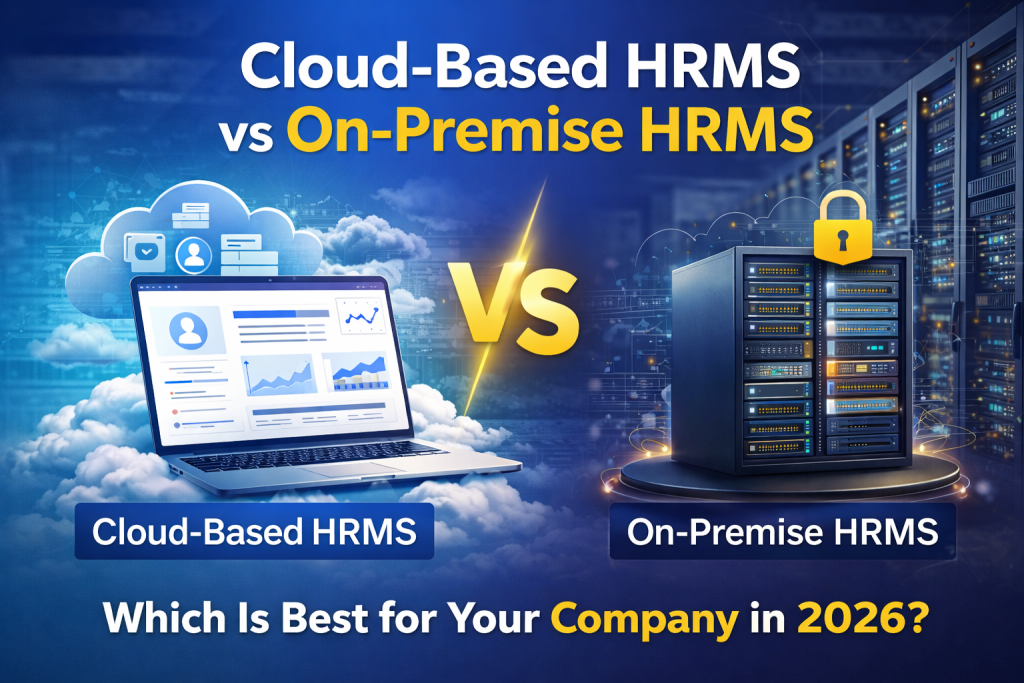
Choosing the right HRMS software is one of the most important decisions for businesses in 2026. Many companies struggle to decide between cloud-based HRMS and on-premise HRMS systems, especially as organizations grow and HR operations become more complex.
With the rise of remote work, evolving compliance requirements, and the need for HR automation software, businesses need to adopt the right solution for their HR teams.
In this guide, we’ll compare cloud vs on-premise HRMS software, explore their pros and cons, highlight key features, and explain why Voffice Desk HRMS software is the best solution for small, medium, and growing businesses.
Know About HRMS Software?
HRMS (Human Resource Management System) is software that streamlines HR processes and automates routine tasks. Key functions include:
- Payroll management, processing, and salary management
- Attendance tracking and leave management
- Employee onboarding and offboarding
- Performance management and appraisals
- Recruitment and applicant tracking
- HR reporting and analytics
Implementing HRMS software reduces manual errors, improves productivity, and allows HR teams to focus on strategic initiatives.
Voffice Desk HRMS software offers a complete platform to manage HR operations efficiently, from payroll to performance tracking, making it ideal for modern businesses in 2026.
Why Companies Are Moving to HRMS Solutions in 2026
Before choosing between cloud or on-premise HRMS, it’s important to understand why businesses are adopting HRMS:
- Automation of manual HR tasks reduces workload and errors
- Improved payroll accuracy ensures timely payments and compliance
- Centralized employee data helps in better decision-making
- Enhanced employee experience through self-service portals
- Scalable HR processes for business growth
- Real-time HR analytics for performance and productivity insights
Cloud-Based HRMS: Overview
Cloud-based HRMS software is hosted on the vendor’s servers and accessed online. Employees and managers can access it from anywhere with an internet connection.
Key Features of Cloud-Based HRMS
- Access HR data anytime, anywhere
- Employee self-service portal for leave, attendance, and payslips
- Mobile-friendly interface for remote teams
- Automatic software updates and security patches
- Scalable as the business grows
- Integration with payroll, attendance machines, and other third-party apps
Benefits of Cloud HRMS
- Lower upfront cost: No need for expensive servers or IT infrastructure
- Faster implementation: Ready-to-use software without lengthy installation
- Remote accessibility: Ideal for hybrid or fully remote teams
- Automatic updates: Ensures your HRMS is always up-to-date with latest compliance
- Scalable platform: Easily add new users or departments as the business expands
On-Premise HRMS: Overview
On-premise HRMS software is installed on your company’s internal servers. Your IT team manages maintenance, updates, and security.
Key Features of On-Premise HRMS
- Full control over HR data and security
- Customizable to match internal workflows
- No dependency on internet connectivity
- Integration with in-house IT systems
Benefits of On-Premise HRMS
- Data security: Sensitive HR data is stored locally
- Customization: Tailor software to your specific HR processes
- Compliance management: Control over internal audit and reporting
- Long-term cost efficiency: Avoid recurring subscription fees
Cloud vs On-Premise HRMS: Detailed Comparison
| Feature | Cloud HRMS | On-Premise HRMS |
| Cost | Low upfront, subscription-based | High upfront, maintenance costs |
| Implementation Time | Fast, ready-to-use | Longer, requires IT setup |
| Maintenance & Updates | Managed by vendor, automatic | Internal IT team required |
| Accessibility | Anywhere, mobile-friendly | Limited to office network |
| Scalability | Easy to scale | Limited by server capacity |
| Data Control | Vendor-managed | Full control in-house |
| Customization | Moderate | Highly customizable |
| Security | Cloud vendor provides encryption & backup | Controlled internally |
| Employee Self-Service | Available on web & mobile | Usually web-based only |
| Integration | Supports multiple third-party apps | Can be integrated internally |
Factors to Consider Before Choosing an HRMS
When deciding between cloud-based or on-premise HRMS, consider:
- Business Size and Growth – Small businesses often benefit from cloud HRMS for flexibility.
- Budget – Cloud HRMS has lower initial cost; on-premise requires larger upfront investment.
- IT Infrastructure – On-premise requires internal IT support; cloud is vendor-managed.
- Data Security Requirements – Highly sensitive industries may prefer on-premise.
- Remote Workforce – Cloud HRMS is better for hybrid or distributed teams.
- Compliance and Reporting Needs – Consider HRMS that automates statutory compliance.
Advantages of Cloud HRMS for Modern Businesses
Cloud HRMS offers several advantages for 2026:
- Mobile Accessibility: Employees can access HR services from smartphones or tablets.
- Real-Time Analytics: Generate HR reports instantly for better decision-making.
- Automatic Updates: Ensures latest tax and compliance rules are applied.
- Employee Self-Service: Reduces HR workload by enabling employees to manage leaves, attendance, and personal information.
- Cost-Effective: Subscription model reduces upfront investment.
Advantages of On-Premise HRMS
On-premise HRMS still has strong advantages for certain businesses:
- Data Control: Full ownership of sensitive employee data.
- Customization: Tailored to company-specific workflows and reporting.
- Integration: Can integrate deeply with in-house ERP or finance systems.
- One-Time Cost: Avoid recurring subscription fees.
Why Voffice Desk HRMS is the Best Choice
Voffice Desk provides a modern cloud-based HRMS software that combines:
- Payroll automation & accurate salary processing
- Attendance & leave management
- Employee self-service portal
- Performance management & goal tracking
- Mobile accessibility for remote teams
- Easy onboarding & HR analytics
With Voffice Desk, small and medium-sized businesses can enjoy the flexibility of cloud HRMS while ensuring security, compliance, and efficiency.
Conclusion
Choosing between cloud-based HRMS and on-premise HRMS depends on your business needs, budget, and IT capabilities.
- Cloud HRMS is ideal for small to medium-sized businesses seeking flexibility, low upfront cost, and remote access.
- On-Premise HRMS works best for organizations needing full control over data and highly customized processes.
For most businesses in 2026, a cloud HRMS like Voffice Desk offers the perfect balance of efficiency, security, and scalability.
Investing in the right HRMS software ensures your HR department operates efficiently, employees are satisfied, and your business is ready for growth.